

Table of Contents
Garage Door Opener Troubleshooting Common Issues and Fixes
Begin With Safe Simple Opener Checks
When a garage door opener stops responding, reverses unexpectedly, or makes a new sound, the cause is not always the motor. The opener is one part of a larger system that includes the door, springs, cables, rollers, tracks, photo eyes, controls, and power supply. A problem anywhere in that system can change how the opener behaves. Starting with safe observations helps you describe the symptoms clearly and avoid adjustments that could make the situation worse.
First, keep people, pets, vehicles, and stored items away from the door. Watch one complete cycle from inside the garage if the door can move without obvious binding or damage. Note whether the problem occurs during opening, closing, or both. Listen for clicking, humming, grinding, rattling, or a motor that runs while the door remains still. These details help separate a control issue from a door or drive-system problem.
Do not loosen springs, cables, drums, bottom brackets, or track hardware. Do not increase opener force to push through resistance. A garage door can weigh hundreds of pounds, and the lifting system stores substantial energy. If the door is crooked, partly off track, unusually heavy, or supported by a damaged cable, stop operation and call a technician.
Some problems can be traced to a tripped outlet, a locked wall control, a blocked photo eye, or a remote battery. Others require professional garage door opener repair because the problem involves electrical components, limits, gears, the rail, door balance, or safety systems. A step-by-step check keeps troubleshooting focused without turning a minor issue into a larger repair.
Remote Wall Control and Power Problems
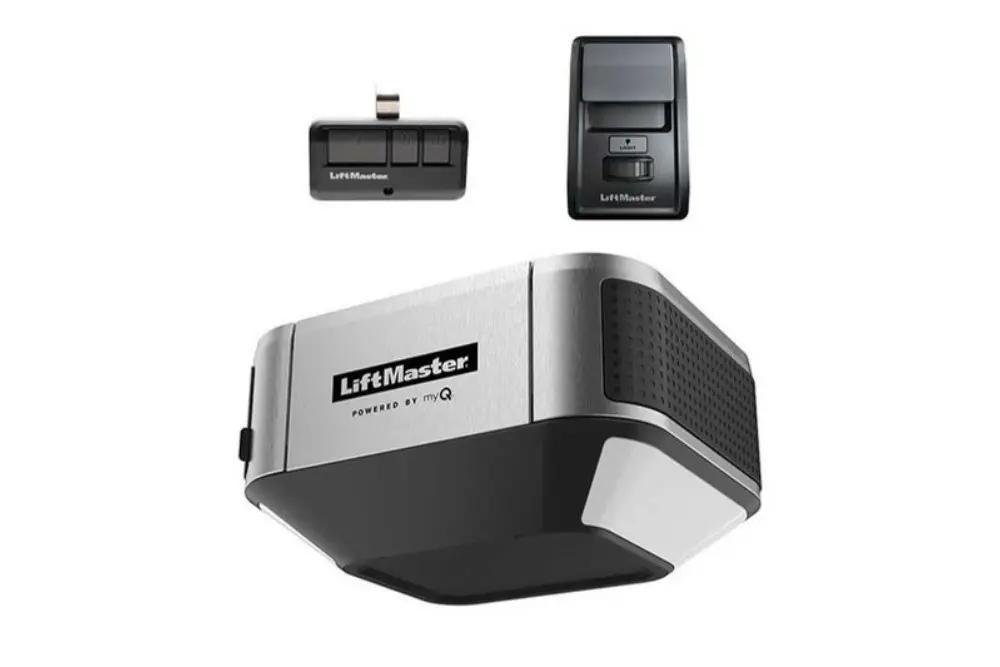
If the opener does nothing, begin with the controls and power source. Try the wall button first, then a remote. If the wall control works but the remote does not, the opener probably has power and the issue may involve the battery, programming, signal interference, or the remote itself. If neither control works, look for signs that the opener has lost power or entered a locked mode.
- Confirm that the opener is plugged into a working outlet and that the cord is secure. Test the outlet with another appropriate device only if it is safe to do so, and check the circuit breaker or GFCI outlet for a trip.
- Replace remote batteries with the correct type and orientation. Remove old batteries promptly if there is corrosion, and follow the opener manufacturer’s instructions before reprogramming a remote.
- Check the wall control for a vacation or lock setting. On many systems, this setting disables handheld remotes while allowing the wired wall button to operate.
- Look for recently added LED bulbs, electronics, or appliances that may interfere with the remote signal. Use bulbs approved for the opener and test from a normal operating distance.
A breaker that repeatedly trips, an outlet that becomes warm, a burning smell, or visible damage is not a reset-and-retry situation. Stop using the equipment and arrange appropriate electrical or garage door service. Likewise, a wall control with damaged wiring should be inspected rather than bypassed.
When the controls work inconsistently, record which device failed, how far the remote was from the door, and whether the opener light flashed. A technician can use that information to evaluate the receiver, logic board, antenna, wiring, and accessories. Homeowners comparing repair and replacement options can also review Bestland’s garage door openers information before scheduling service.
Safety Sensor and Reversal Problems
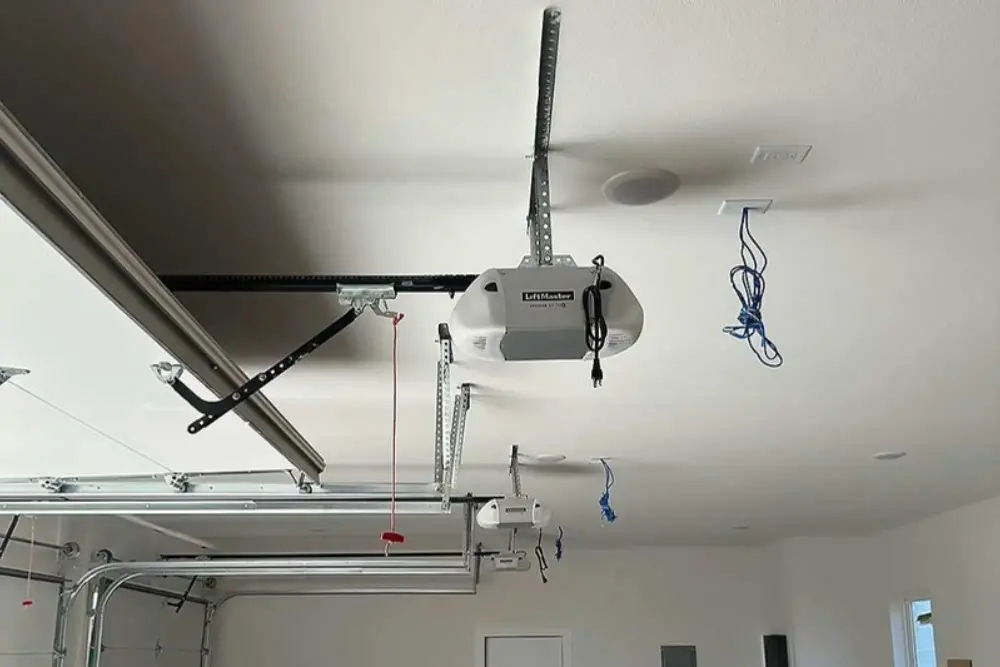
When an opener raises the door but will not close it, the photo eyes are a common place to check. These small sensors sit near the bottom of the tracks and project an invisible beam across the opening. If the beam is interrupted or the sensors are misaligned, the opener should prevent normal closing. This is a safety feature, not an inconvenience to defeat.
- Wipe dust, cobwebs, condensation, and road salt residue from the sensor lenses with a soft dry cloth. Do not spray cleaner directly into the sensor.
- Move boxes, tools, extension cords, and other objects away from the beam path. Even a small item or hanging cord can interrupt the signal.
- Check whether both sensor indicator lights are steady according to the manufacturer’s instructions. A blinking or dark light may point to alignment, wiring, or power trouble.
- Inspect visible low-voltage wires for loose connections, staples through the insulation, or damage near the floor. Do not splice or bypass safety wiring unless the manufacturer permits the procedure and a qualified person performs it.
Sunlight, vibration, a bumped bracket, or moisture can also affect sensor performance. If a sensor must be held in position to work, the bracket or alignment needs attention. Repeatedly pressing and holding the wall button to force the door down can conceal a safety fault and should not become the normal solution.
The automatic reversal system also responds to resistance. A door that reaches the floor and immediately rises may have an incorrect close limit, an obstruction, frozen weatherstripping, or mechanical resistance in the door. A door that fails an approved reversal test should remain out of use until it is inspected. Bestland’s garage door safety inspection service can evaluate sensors, limits, force settings, balance, and the condition of the door itself.
When the Opener Runs but the Door Does Not Move
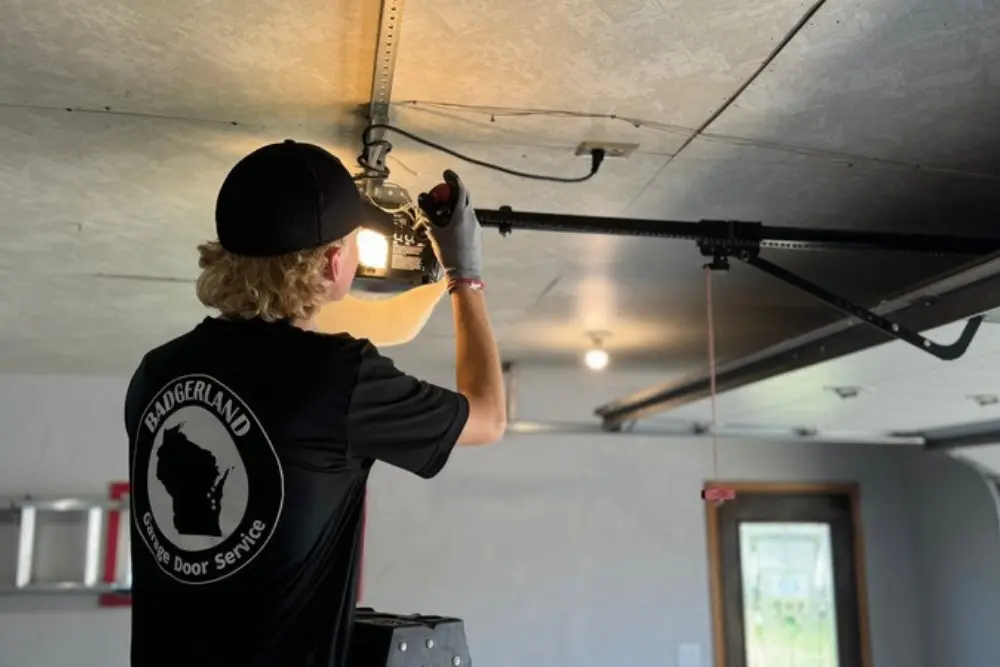
A humming motor or moving trolley does not always mean the opener can lift the door. The emergency release may be disengaged, a drive component may be worn, or the door may have a broken spring or cable. Look at the trolley and rail from a safe distance. If the motor runs but the chain, belt, screw, or trolley does not move normally, stop cycling the opener.
If someone recently used the emergency release, consult the manufacturer’s instructions for safe reconnection. Do not pull the release while the door is open unless the door is properly supported and the procedure specifically allows it. An unbalanced door can fall or move rapidly after disconnection.
A broken spring often makes the door feel too heavy for the opener, while a damaged cable can leave the door uneven. The opener is designed to guide a properly balanced door, not replace the lifting system. Continuing to press the button can strip gears, bend the rail, or overheat the motor. Spring and cable problems require trained service.
Worn or seized rollers can also add resistance. If the door shakes, scrapes, or binds at the same point, professional garage door roller repair may restore smoother travel and reduce strain on the opener. Visible fraying, slack, or uneven cable travel calls for garage door cable repair rather than a force adjustment.
When Adjustment Repair or Replacement Makes Sense
An opener that works after a basic reset may still need attention if the same symptom returns. Age, usage, available safety features, parts availability, and the condition of the door all influence whether an adjustment, repair, or replacement is the better choice. A technician should diagnose the complete system before recommending a new unit.
- Choose inspection and adjustment when the opener is otherwise reliable, the door is balanced, safety features are intact, and the issue involves limits, travel, alignment, programming, or routine wear.
- Choose repair when a replaceable component such as a gear, trolley, sensor, control, wiring connection, or accessory has failed and the opener remains a suitable match for the door.
- Consider replacement when the opener lacks required safety features, has repeated major failures, has unavailable parts, or cannot operate the door safely and consistently after the door itself is repaired.
- Schedule door maintenance when opener symptoms are caused by friction, loose hardware, worn rollers, poor balance, or another mechanical condition. Correcting the door problem may protect the existing opener.
Features can also influence the decision. Modern units may offer quieter drive systems, battery backup, improved lighting, smart controls, and stronger security functions. These conveniences should come after safety and compatibility. The correct opener must suit the door’s size, weight, construction, and usage.
A professional garage door tune-up is useful when the source of the problem is unclear. The technician can inspect hinges, rollers, tracks, springs, cables, balance, fasteners, opener travel, force settings, photo eyes, reversal, and manual release operation. This prevents an opener-only diagnosis from overlooking a door condition that caused the symptom.
Garage Door Opener Troubleshooting FAQs
Why does my garage door opener click but not move?
Clicking can indicate that the opener received a command but cannot complete it. The cause may involve a locked or obstructed door, a broken lifting component, a worn drive part, a logic-board problem, or a safety fault. Stop repeated attempts if the door is heavy, crooked, or visibly damaged.
Why will my garage door open but not close?
Photo-eye obstruction or misalignment is common, but close-limit settings, damaged wiring, sunlight, moisture, or mechanical resistance can create similar symptoms. Clean the lenses, clear the beam path, and check indicator lights. Do not bypass the sensors or increase force to overcome the problem.
Why does the door reverse as soon as it touches the floor?
The opener may have an incorrect close limit, or the door may be meeting unexpected resistance at the floor. Ice, debris, a damaged seal, track problems, or poor balance can contribute. A technician can distinguish a settings issue from a mechanical condition.
Can I replace a garage door opener remote myself?
Many remotes can be replaced and programmed by following the manufacturer’s instructions, provided the remote is compatible with the opener. If several controls fail, the issue may be in the receiver, antenna, wall control, wiring, or logic board rather than the remote.
When should I call a garage door technician?
Call when the door is off track, uneven, unusually heavy, supported by a damaged spring or cable, or unable to pass safety tests. Service is also appropriate when electrical symptoms, repeated reversals, grinding, burning odors, or recurring control failures remain after safe basic checks.
Schedule Garage Door Opener Service With Bestland
Garage door opener troubleshooting is most effective when the technician evaluates both the operator and the door it controls. Bestland Garage Door Service helps homeowners in Green Bay, Appleton, and nearby Northeast Wisconsin communities identify control, sensor, balance, hardware, and drive-system problems. The goal is a door that moves smoothly, responds consistently, and completes required safety functions.
Before the appointment, note the opener brand and model, the approximate age of the system, which controls work, and exactly when the symptom occurs. Share any recent changes, such as a power outage, new light bulbs, a vehicle impact, or maintenance work. Clear a safe path to the opener, wall control, and door so the technician can inspect and test the system.
Having trouble with your garage door opener? Contact Bestland Garage Door Service for fast diagnosis and repair. For local scheduling information, review Bestland’s Green Bay garage door service page and describe the symptoms you observed.
Do not settle for the rest. Work with the BEST at Bestland Garage Door Service.
Related Posts
See What Our Customers Have to Say About Our Service
See What Our Customers Have to Say About Our Service
REQUEST A CALLBACK
Need Repair Service or New Door?
Complete the form, and one of our team members will promptly reach out to schedule your appointment.