

Table of Contents
Noisy Garage Door Sounds Are Clues Worth Hearing
A garage door does not have to be silent, but a change in sound should get your attention. A door that begins squeaking, grinding, rattling, popping, or banging is often telling you that a moving part needs adjustment, lubrication, or repair. Ignoring the change can allow a small wear issue to spread to rollers, hinges, tracks, cables, springs, or the opener.
Homeowners in Green Bay and Appleton hear these problems more often as temperatures change. Metal parts contract during cold weather, lubricants can thicken, moisture can affect hardware, and salt or debris may collect near the bottom of the system. A sound that appears in fall can become louder when winter arrives and the door works under colder, heavier conditions.
The safest response is to notice when the sound happens and avoid forcing the door. Listen during opening, closing, and the moment the door starts moving. Note whether the sound comes from one side, above the door, or from the opener rail. That information can help a technician diagnose the problem, but homeowners should not loosen springs, cables, brackets, or bottom fixtures. Those parts can be under serious tension.
It can help to record a short video from a safe distance when the sound occurs. A recording may capture a rattle or pop that does not happen during the service visit. Keep hands, clothing, children, and pets away from the moving door while recording. Never stand under a door that is moving unevenly or appears unstable.
Garage Door Roller Repair for Grinding and Squeaking
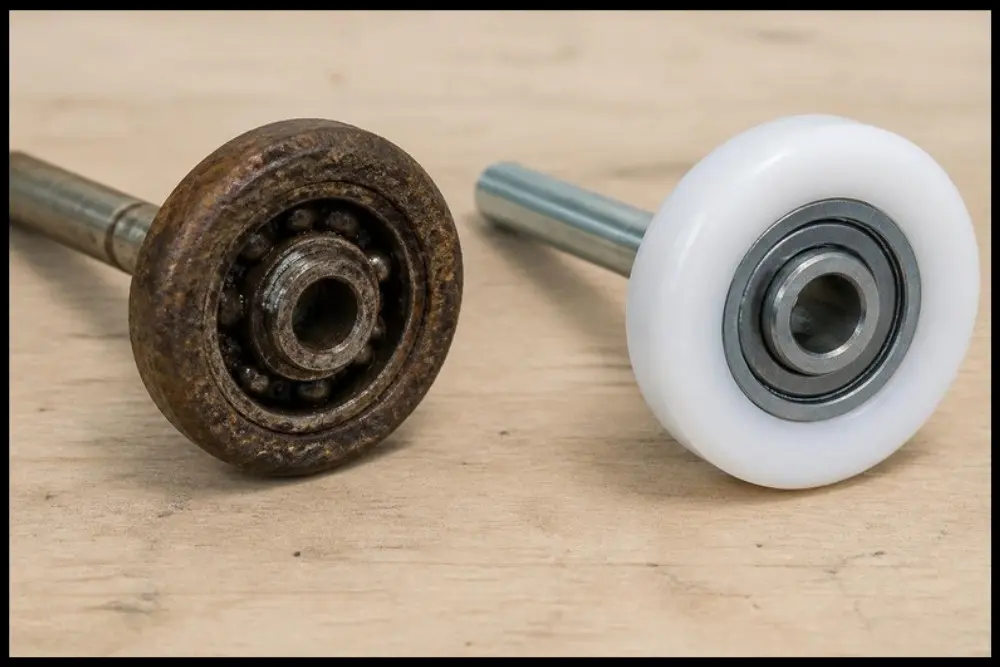
Rollers guide the door through the tracks every time it opens and closes. When they wear, dry out, crack, or develop flat spots, the door may squeak, rumble, or grind. Steel rollers without sealed bearings can become especially noisy as they age. Nylon rollers are often quieter, but they still need inspection because the wheel or bearing can wear.
- A repeating squeak at the same point in every cycle may indicate a dry roller, hinge, or bearing that needs the correct garage door lubricant.
- A rough rolling or growling sound can come from worn bearings that no longer turn smoothly under the weight of the door.
- A clicking sound may occur when a damaged roller shifts in the track or when a loose hinge moves as each section bends.
- Visible wobbling, chipped nylon, rust, or a roller that slides instead of turning are signs that replacement should be considered.
Bestlands garage door roller repair service can identify which rollers are worn and whether related hinges or tracks have also been affected. Replacing damaged rollers before they seize can reduce noise and help prevent the door from pulling against the track.
Do not spray every part with a general household product. Some sprays displace moisture but do not provide lasting lubrication, and applying lubricant to the track surface can attract dirt. A technician can show you which pivot points need a garage door specific lubricant and which surfaces should remain clean.
Garage Door Springs and Cables Can Cause Loud Warning Sounds
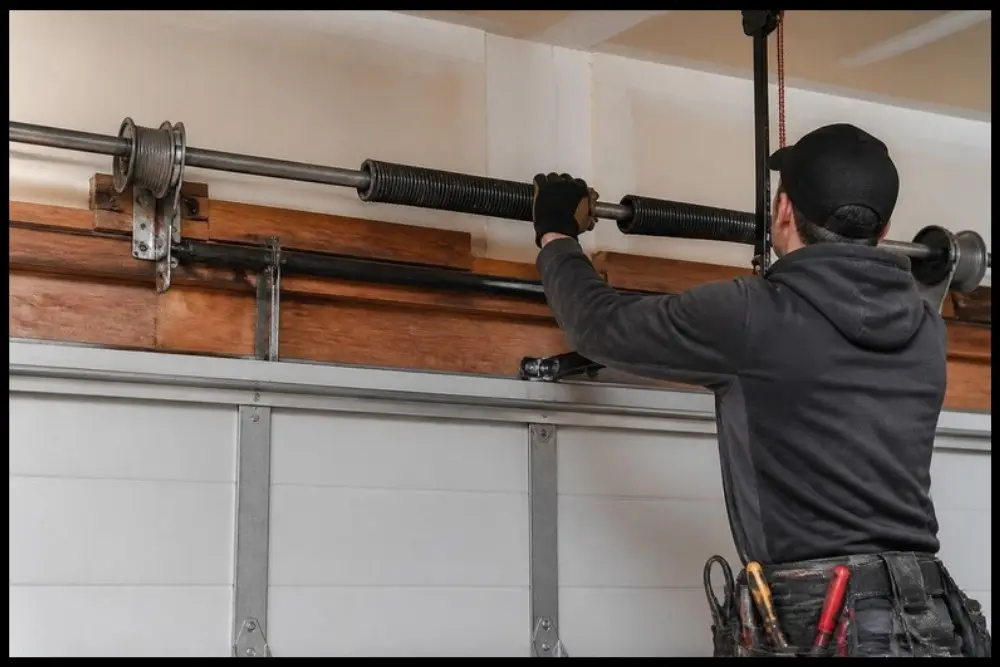
Springs and cables carry and control much of the doors weight. A sharp bang from the garage can mean a torsion spring has broken, even if no one was operating the door at the time. A door with a broken spring may feel extremely heavy, open only a few inches, or sit unevenly. Do not keep pressing the opener button because the motor is not designed to lift the full door by itself.
Cables can create scraping, slapping, or rattling sounds when they fray, lose tension, rub against another part, or begin winding incorrectly on a drum. Because cables work with the spring system, they should be inspected by a trained garage door technician.
- A sudden bang followed by a door that will not open normally can indicate a broken spring and the need for garage door spring repair.
- A loose cable may tap against a panel or track, but the underlying cause can involve spring tension or an uneven door.
- Rust, visible wire damage, gaps in a spring coil, or a crooked door are reasons to stop using the system and request service.
- Repeated popping near the top of the door may come from spring movement, worn bearing plates, or hardware shifting under load.
Bestlands garage door cable repair team can inspect the complete lifting system rather than treating the sound alone. Springs, cables, drums, bearings, and bottom brackets must work together. Repairing the correct cause helps restore safe balance and reduces strain on the opener.
Track Alignment and Loose Hardware Behind Garage Door Noise
Tracks guide the rollers, but they should not carry the full weight of the door or force it into position. A bent track, loose mounting bracket, or poor alignment can cause scraping and rubbing. You may see a roller edge contacting the track, a gap between sections, or metal shavings near the noisy area. Continuing to operate the door can make the bend worse or allow a roller to leave the track.
Routine vibration also loosens fasteners over time. Hinges, track brackets, opener mounts, and struts can rattle when hardware backs out. Some visible nuts and bolts may be checked during maintenance, but homeowners should never adjust hardware attached to springs, cables, bottom brackets, or the torsion system.
A door that is already crooked, jammed, or partly outside the track should remain in place until a professional arrives. Trying to push it straight can cause a section to fall or a cable to release. Bestlands off track door repair service has the tools to secure the door, correct the cause, and test the complete travel path.
Panel and hinge condition matter as well. A cracked hinge can flex each time a section turns through the curved track, creating a snap or click. A loose reinforcement strut may vibrate across the width of the door. These sounds can travel through metal and seem to come from another location, which is why a full visual and operating inspection is more dependable than replacing the first noisy part.
Garage Door Opener Noise and Maintenance Issues
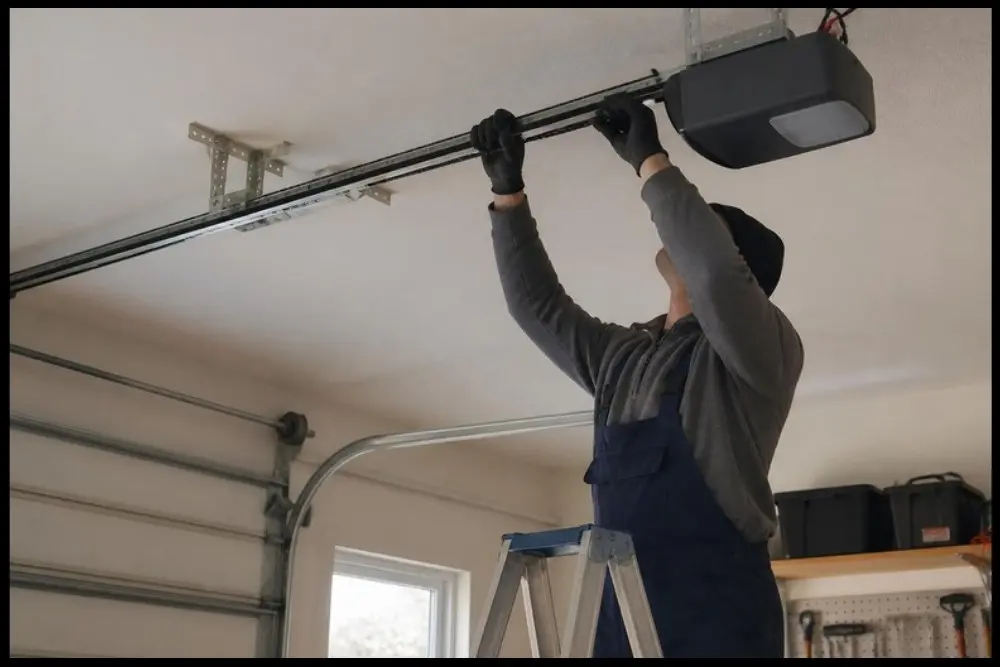
Sometimes the door is in reasonable condition and the noise begins in the opener. Chain drive units may rattle when the chain is too loose, while worn gears can grind inside the motor housing. A loose rail, dry trolley, vibrating light cover, or opener bracket can also amplify sound through the ceiling. Belt drive systems are usually quieter, but they still require correct tension and secure mounting.
- A hum with little or no door movement may signal a blocked door, failed gear, weak component, or lifting problem that should be diagnosed before repeated use.
- Rattling above the door may come from the rail, mounting straps, chain, cover, or loose hardware rather than the door panels.
- Reversing, stopping, or straining sounds can indicate an opener setting problem, poor door balance, track resistance, or safety sensor issue.
- Noise that improves when the opener is disconnected may help separate a motor or rail issue from a roller, hinge, spring, or track problem.
A routine garage door tune up includes lubrication, balance checks, hardware inspection, safety testing, and adjustments that address many common noise sources. The technician can operate the door manually, listen under controlled conditions, and determine whether the opener is compensating for excess resistance.
Homeowners can keep the photo eyes clean, remove debris from the floor near the tracks, and watch for visible changes. More involved adjustments should be left to a professional. A quiet door is not only more pleasant. It is often a sign that the system is moving with less friction and unnecessary strain.
Noisy Garage Door FAQs for Wisconsin Homeowners
Why does my garage door squeak more when the weather turns cold?
Cold temperatures can change how metal parts fit and how lubricant performs. Rollers, hinges, springs, and seals may become stiffer, while moisture and debris add resistance. A seasonal inspection can identify dry pivot points, worn parts, loose hardware, and balance problems before deep winter weather makes them more noticeable.
Can I lubricate a noisy garage door myself?
Homeowners can often apply a garage door specific lubricant to approved hinges, rollers, and spring surfaces if the manufacturer allows it. Do not lubricate track surfaces, photo eyes, or parts that appear damaged. Never loosen tensioned hardware. If the noise is grinding, popping, banging, or paired with uneven movement, schedule a professional inspection instead.
How do I know whether the noise comes from the opener or the door?
A technician can disconnect the opener and move the properly secured door by hand to compare operation. If the door is smooth and quiet manually, the opener or rail may be responsible. If the door still binds, squeaks, or feels heavy, the problem may involve rollers, hinges, tracks, springs, or cables. Do not perform this test when a spring is broken or the door is unstable.
Is a popping garage door dangerous?
It can be. Popping may come from sections binding, rollers shifting, a spring moving, or hardware releasing under load. Stop using the door if it jerks, hangs unevenly, shows cable damage, or produces a sudden loud bang. A professional should inspect the system before it is operated again.
Will replacing garage door rollers make the door quieter?
Replacing worn rollers can make a major difference when the wheels or bearings are the source of the sound. The result also depends on track condition, hinge wear, door balance, and opener operation. Bestland inspects the full system so new rollers are not installed while another problem continues to create friction or noise.
Schedule Noisy Garage Door Repair With Bestland
A noisy door is easiest to address before a roller seizes, a cable frays further, a track bends, or the opener begins working against extra resistance. Pay attention to new sounds, visible movement changes, and the point in the cycle when the noise occurs. Then stop using the system if the door becomes crooked, unusually heavy, or difficult to control.
Bestland Garage Door Service provides local garage door repair for homeowners throughout Green Bay, Appleton, and surrounding Northeast Wisconsin communities. The technician will inspect the door, identify the source of the noise, explain the available repair choices, and test the system after the work is complete. The recommendation should address the cause, not simply cover the sound.
Before the appointment, leave the door in the safest position and clear enough space for the technician to inspect both sides of the opening. Share when the noise began, whether it changes with temperature, and whether any recent impact or repair occurred. Those details can shorten diagnosis time and help the technician reproduce the concern.
Tired of a loud, squeaky garage door? Contact Bestland Garage Door Service for a quiet, smooth running fix. Prompt service can protect the opener, reduce wear on connected parts, and help your garage door operate more safely.
Homeowners who want local help can also review Bestlands Green Bay garage door service information before scheduling. Do not settle for the rest. Work with the BEST at Bestland Garage Door Service.
Related Posts

See What Our Customers Have to Say About Our Service
See What Our Customers Have to Say About Our Service
REQUEST A CALLBACK
Need Repair Service or New Door?
Complete the form, and one of our team members will promptly reach out to schedule your appointment.