
Table of Contents
Common Garage Door Damage After Summer Storms
Summer storms can be hard on garage doors. High winds, heavy rain, flying debris, hail, and power interruptions can all affect how a garage door looks, moves, and protects the home. Some damage is obvious right away, such as a dented panel or a door that will not open. Other problems can be easier to miss at first and may show up later as unusual noise, uneven movement, opener strain, or water coming in around the edges of the door.
For many homeowners, the garage door is one of the largest moving systems in the home. It is also one of the main barriers between your garage and the weather outside. When a strong summer storm moves through Appleton, Green Bay, or the surrounding area, that door can take on a lot of pressure. Even if it looks normal from the driveway, the hardware, tracks, rollers, seals, sensors, and opener may have been affected by wind, water, or impact.
Bestland Garage Door Service helps homeowners spot storm-related garage door damage before it becomes a safety issue. After strong weather moves through, a quick visual check can help you decide whether your door needs service. The most important thing is to avoid forcing a damaged garage door to operate. If the door is crooked, stuck, scraping, shaking, or reversing unexpectedly, it is better to schedule a professional inspection than risk making the damage worse.
Panel, Track, and Hardware Damage
The most visible storm damage often appears on the outside of the garage door, but the impact can affect the moving system as well. A garage door is designed to move in a controlled path. When a panel is dented, a track shifts, or hardware loosens, the entire system can begin working harder than it should. That extra strain may not seem serious at first, but it can lead to opener problems, roller wear, broken hardware, or a door that eventually stops working.
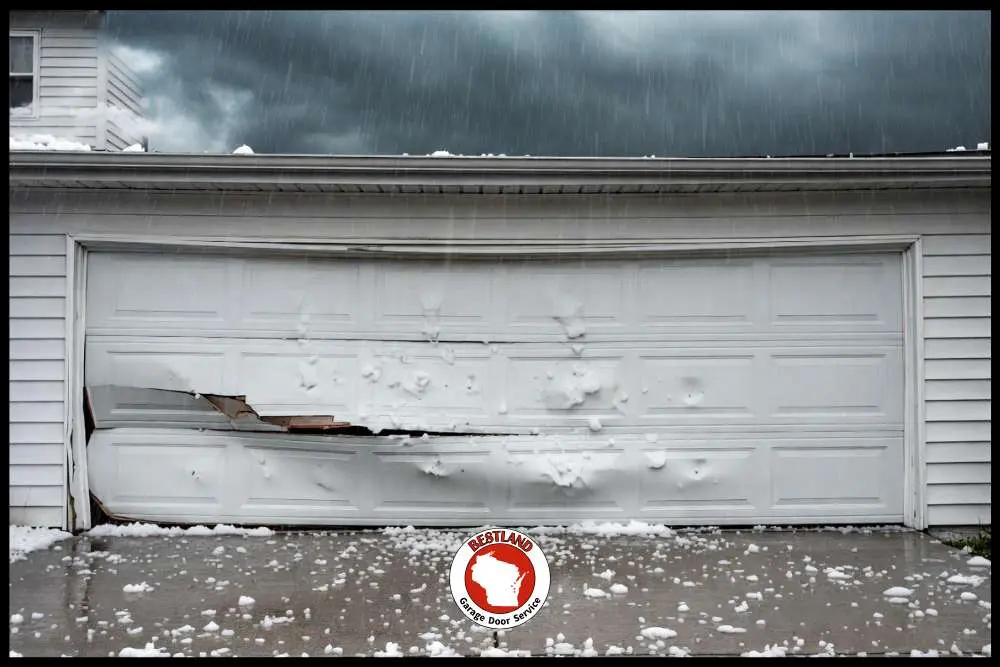
Dented panels: Hail, branches, and windblown debris can leave dents that affect appearance and, in some cases, door movement. A small dent may only be cosmetic, but larger dents can interfere with how the section bends and travels through the tracks. If the panel is bowed, cracked, or rubbing as the door moves, it should be inspected before the damage spreads to the rollers or opener.
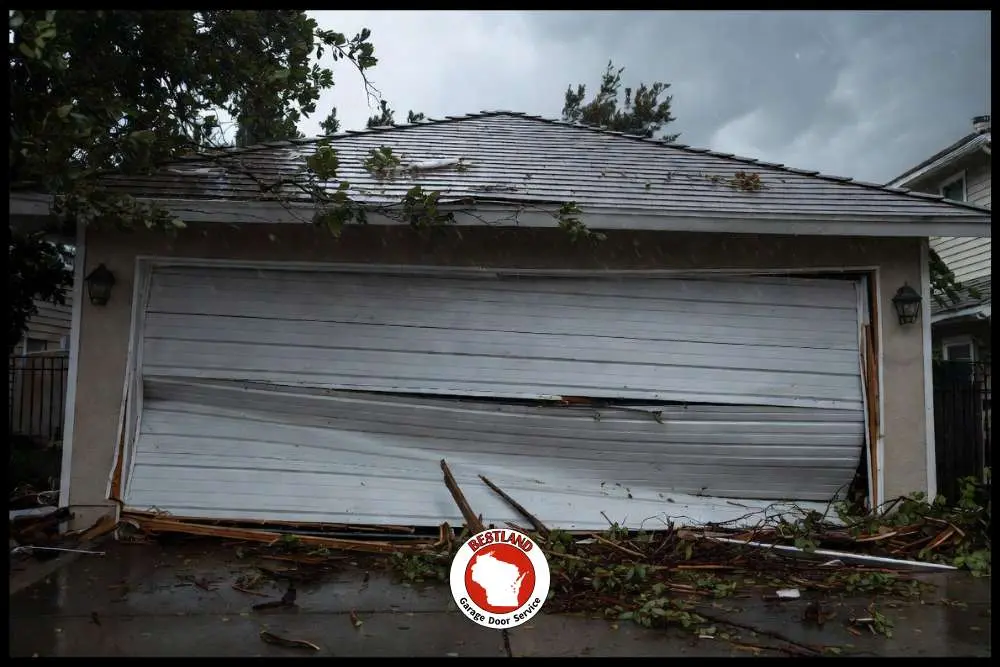
Bent tracks: If the track is bent, shifted, or pulled away from the wall, the door may scrape, shake, or stop before fully opening or closing. Tracks are what guide the door, so even a small change in alignment can create bigger movement problems. A door that looks uneven, hangs at an angle, or makes grinding sounds after a storm may have track or roller damage.
Loose hardware: Strong vibration and impact can loosen hinges, brackets, and fasteners. This is especially common when the door was already worn before the storm. Loose hardware can cause rattling, uneven movement, and extra stress on the opener. If you notice screws, bolts, hinges, or brackets that look out of place, it is best to avoid operating the door until the system is checked.
Storm garage door damage can also reveal problems that were already starting. For example, older rollers, worn hinges, or weakened panels may continue working under normal conditions but fail after high winds or impact. That is why a garage door safety inspection after severe weather can be helpful, even if the door is still moving. Catching hardware damage early can often prevent a larger garage door repair later.
Water, Seal, and Weather Protection Issues
A garage door helps protect the garage from rain, wind, and debris. Summer storms can expose weak seals or create new gaps around the door. These issues are easy to overlook because the door may still open and close, but water intrusion can lead to damage inside the garage, especially if the space is used for storage, tools, equipment, or access into the home.
Damaged bottom seal: If water enters under the door, the bottom rubber seal may be cracked, flattened, torn, or misaligned. The bottom seal is one of the first lines of defense against rain and debris. When it no longer sits tightly against the floor, water can run under the door during heavy rain. This can be especially noticeable after wind-driven storms because rain may come in at an angle instead of falling straight down.
Side and top gaps: Wind-driven rain can reveal gaps around the frame that need adjustment or weatherstripping. If you see daylight around the sides of the garage door, feel drafts, or notice water marks near the edges, the door may not be sealing correctly. In some cases, the door may need a simple adjustment. In other cases, damaged weatherstripping or frame-related issues may need to be repaired.
Moisture around the opener: Water near electrical components should be taken seriously and checked before continued use. If rain has entered near the opener, wall button, outlet, sensors, or wiring, avoid using the system until it is safe. Moisture can cause intermittent opener issues, sensor problems, or electrical concerns that are not always obvious right away.
Water damage can also affect the lower sections of the door. If moisture sits against the bottom panel, it may contribute to rust, swelling, peeling, or deterioration depending on the door material. A garage door tune up after storm season can help identify seal problems, check hardware, and make sure the door is still closing securely. Good weather protection is not just about comfort. It also helps protect the garage, the opener system, and anything stored inside.
Opener and Safety System Problems After Storms
Power surges, outages, and storm movement can affect the garage door opener and safety sensors. Even if the door looks fine, the system may not operate correctly. Because the opener is connected to the door, tracks, sensors, and electrical power, a storm can create more than one issue at the same time.
Opener not responding: A storm-related power issue may affect the outlet, opener, remote, wall control, or control board. Sometimes the fix is simple, such as checking power to the opener. Other times, the opener may have experienced a surge or internal issue. If the opener hums, clicks, flashes, or does not respond normally after a storm, it should be evaluated before continued use.
Sensors out of alignment: Wind, debris, or accidental impact can knock photo eye sensors out of place. These sensors are an important safety feature. If they are misaligned, dirty, loose, or blocked, the door may refuse to close or may reverse back open. Homeowners sometimes assume the opener is broken when the issue is actually with the sensors.
Door reversing or stopping: If the door reverses unexpectedly, stops partway, or moves unevenly, there may be sensor, track, spring, roller, or force-setting issues that need inspection. After a storm, these symptoms should not be ignored. The opener may be trying to move a door that is no longer properly balanced or aligned.
A garage door opener is not designed to force a damaged door into motion. When the door is heavy, crooked, blocked, or off track, the opener can become strained. Over time, this can shorten the garage door opener lifespan or lead to premature replacement. If the door feels unusually heavy when operated manually, or if the opener sounds louder than normal, schedule service before the system gets worse. Bestland Garage Door Service can check the opener, sensors, tracks, hardware, and door balance to identify the cause of the problem.
What to Do Before Using the Door Again
After a severe storm, do not force the garage door open or closed if it is stuck, crooked, or making unusual sounds. Forcing the door can make damage worse and may create a safety risk. A garage door is heavy, and if one part of the system is damaged, other parts may be under tension or strain. That is why it is important to stop and look before using the door again.
Start with a simple visual check from a safe distance. Look for dents, bent tracks, loose hardware, broken glass, sagging sections, frayed cables, gaps around the door, water intrusion, or debris near the tracks. Also listen for new sounds when the door moves, such as scraping, grinding, popping, or shaking. If anything looks or sounds different after the storm, it is better to have the door inspected.
Avoid trying to repair springs, cables, tracks, or opener force settings on your own. These parts can be dangerous when they are under tension. A professional garage door technician can determine whether the issue is minor, such as a seal adjustment or sensor alignment, or more serious, such as track damage, panel damage, or a door that is no longer balanced.
Bestland Garage Door Service provides garage door repair, storm damage inspections, panel repair, opener service, and garage door tune ups for homeowners in Appleton, Green Bay, and nearby areas. If your garage door took a hit during summer weather, a professional inspection can help protect your home and prevent larger repairs. Scheduling service after a storm can also give you peace of mind that the door is safe, secure, and ready for daily use.
FAQ
What should I check after a summer storm damages my garage door?
Look for dented panels, bent tracks, loose hardware, water intrusion, damaged seals, sensor issues, opener problems, and any change in how the door moves. Also check for daylight around the edges of the door, debris near the tracks, and unusual sounds when the door operates. If the door looks crooked, shakes, scrapes, or will not close correctly, schedule garage door service before using it again.
Can a storm knock a garage door off track?
Yes. Wind, impact, debris, or a sudden hit to the door can affect the tracks and rollers, especially if the door was already worn or misaligned. A garage door that is off track may look uneven, hang at an angle, or stop before fully opening or closing. Do not try to force it back into place. Off track garage doors can be dangerous, and the problem should be inspected by a professional.
Should I use my garage door if it looks crooked after a storm?
No. A crooked or uneven door can be dangerous to operate. It may have track damage, roller problems, cable issues, spring strain, or panel damage. Continuing to use the door can make the repair more expensive and may put extra pressure on the opener. If the door looks uneven after a storm, stop using it and schedule service.
Can storm damage lead to garage door replacement?
Sometimes. Minor dents, loose hardware, weatherstripping issues, or sensor problems may be repairable. However, severe panel damage, structural damage, repeated track problems, or a door that no longer moves safely may require replacement. A professional inspection can help determine whether garage door panel repair, a tune up, or full garage door replacement makes the most sense.
Why is my garage door opener acting strange after a storm?
Storms can cause power surges, outages, sensor misalignment, moisture issues, or strain from a damaged door. If the opener clicks, hums, reverses, flashes, or stops midway, the opener may not be the only problem. The door itself may be heavy, misaligned, or blocked. A technician can inspect both the opener and the door system to find the actual cause.
When should I schedule a garage door tune up after severe weather?
Schedule a garage door tune up if the door sounds louder than usual, moves unevenly, has visible damage, lets water in, or has not been serviced recently. A tune up after storm season can help identify worn rollers, loose hardware, seal problems, opener strain, and safety sensor issues before they turn into larger repairs.
Related Posts
See What Our Customers Have to Say About Our Service
See What Our Customers Have to Say About Our Service
REQUEST A CALLBACK
Need Repair Service or New Door?
Complete the form, and one of our team members will promptly reach out to schedule your appointment.